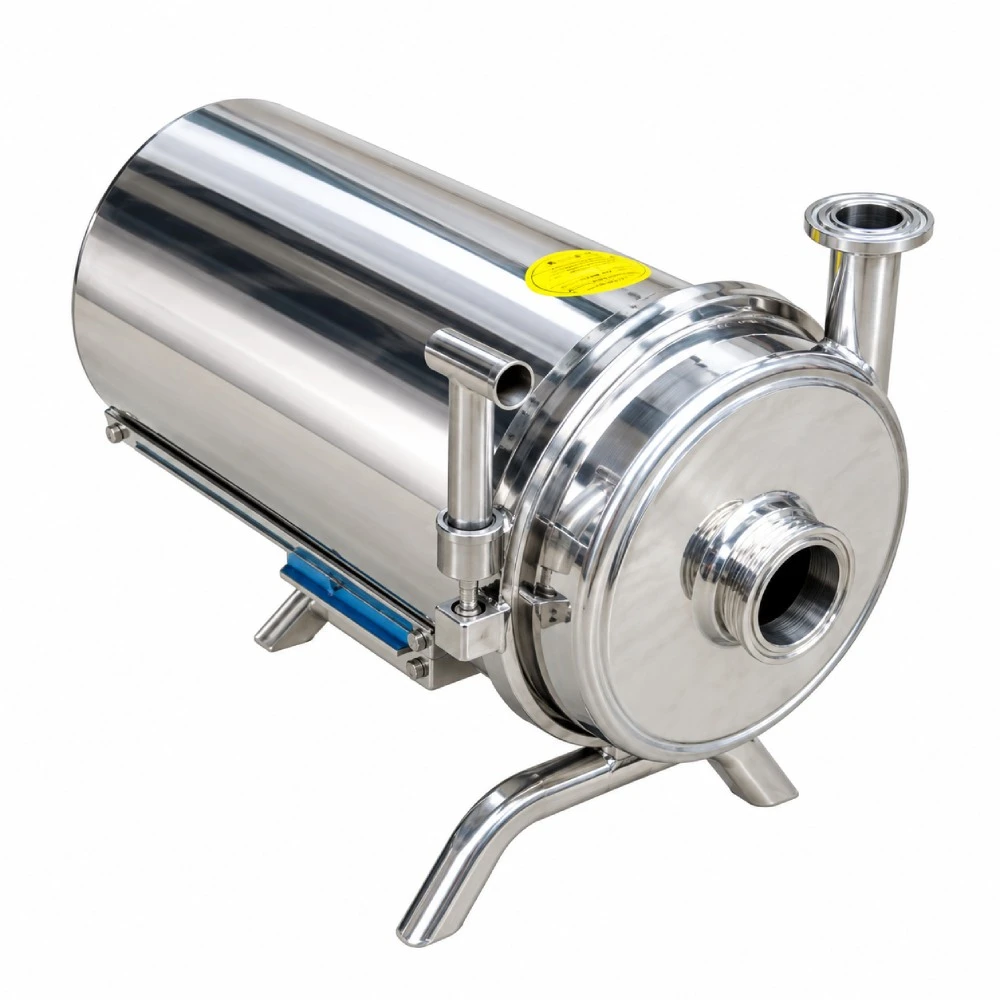
Sanitary Beverage Pump
Oystar Sanitary Beverage Pumps support hygienic liquid transfer in dairy, beverage, juice, and food processing applications. Contact Oystar Dairy Fittings to enquire about specifications, suitable models, pricing, and supply options.
Material Compliance & Dimensional Specifications
Standard dimensions and manufacturing tolerances adhering strictly to ASTM and sanitary standards:
A Sanitary Beverage Pump is designed for hygienic transfer and circulation of beverages and other liquid products in food processing and beverage production systems. It supports the controlled movement of liquids through pipelines while helping maintain product quality and cleanliness during processing.
Oystar Sanitary Beverage Pumps are intended for applications where hygienic design, reliable performance, ease of cleaning, and compatibility with food-grade processing systems are important. Depending on the selected model, these pumps can be suitable for transferring milk, fruit juices, soft drinks, syrups, liquid food ingredients, and other compatible beverages.
When selecting a sanitary beverage pump, buyers should consider the required flow rate, discharge pressure, liquid viscosity, operating temperature, connection type, seal material, and cleaning requirements. Wetted-part materials, surface finish, and food-contact compliance should be confirmed against the specific model and application.
Oystar Dairy Fittings serves industrial buyers looking for sanitary pumps and dairy processing equipment for beverage production, hygienic liquid handling, and food processing installations.
3. Applications of Sanitary Beverage Pumps
Sanitary beverage pumps are used to move liquids safely and efficiently through hygienic processing systems. Common applications include:
- Transferring milk and dairy-based beverages between processing tanks.
- Moving fruit juices, juice concentrates, and beverage blends.
- Transferring soft drinks and other compatible liquid refreshments.
- Handling syrups, flavouring liquids, and liquid food ingredients.
- Feeding liquid products to filling and packaging machines.
- Circulating beverages through processing and filtration equipment.
- Transferring liquids between storage tanks and production lines.
- Supporting hygienic liquid handling in beverage manufacturing plants.
- The suitability of each application depends on the liquid\\\\\\\'s viscosity, temperature, solids content, chemical compatibility, and the selected pump design.
4. Industries Where the Product Is Used
Dairy Processing Industry: For transferring milk, flavoured milk, and other compatible dairy beverages.
Food and Beverage Industry: For moving beverage ingredients and finished liquid products through production systems.
Juice Manufacturing Industry: For transferring fruit juices and compatible liquid concentrates.
Soft Drink Industry: For liquid transfer during beverage preparation and production.
Bottling and Packaging Plants: For supplying beverages to filling and packaging equipment.
Food Ingredient Manufacturing: For handling syrups, liquid flavours, and other compatible ingredients.
Contract Beverage Manufacturing: For hygienic liquid movement across processing and storage stages.
Industrial Food Processing: For applications requiring hygienic pumping equipment and suitable food-contact materials.
5. Benefits of Sanitary Beverage Pumps
Hygienic liquid handling: Designed for suitable beverage processing applications.
Reliable transfer: Helps move compatible liquids between tanks and production equipment.
Easy cleaning potential: Selected designs may support hygienic cleaning procedures.
Production efficiency: Helps maintain consistent liquid movement in processing lines.
Versatile applications: Can be selected for different beverage types and production requirements.
Integration flexibility: Available configurations may suit different pipelines and processing systems.
Reduced handling steps: Supports closed pipeline transfer where the installation is designed accordingly.
Application-specific selection: Different pump configurations can be evaluated for flow, pressure, viscosity, and temperature requirements.