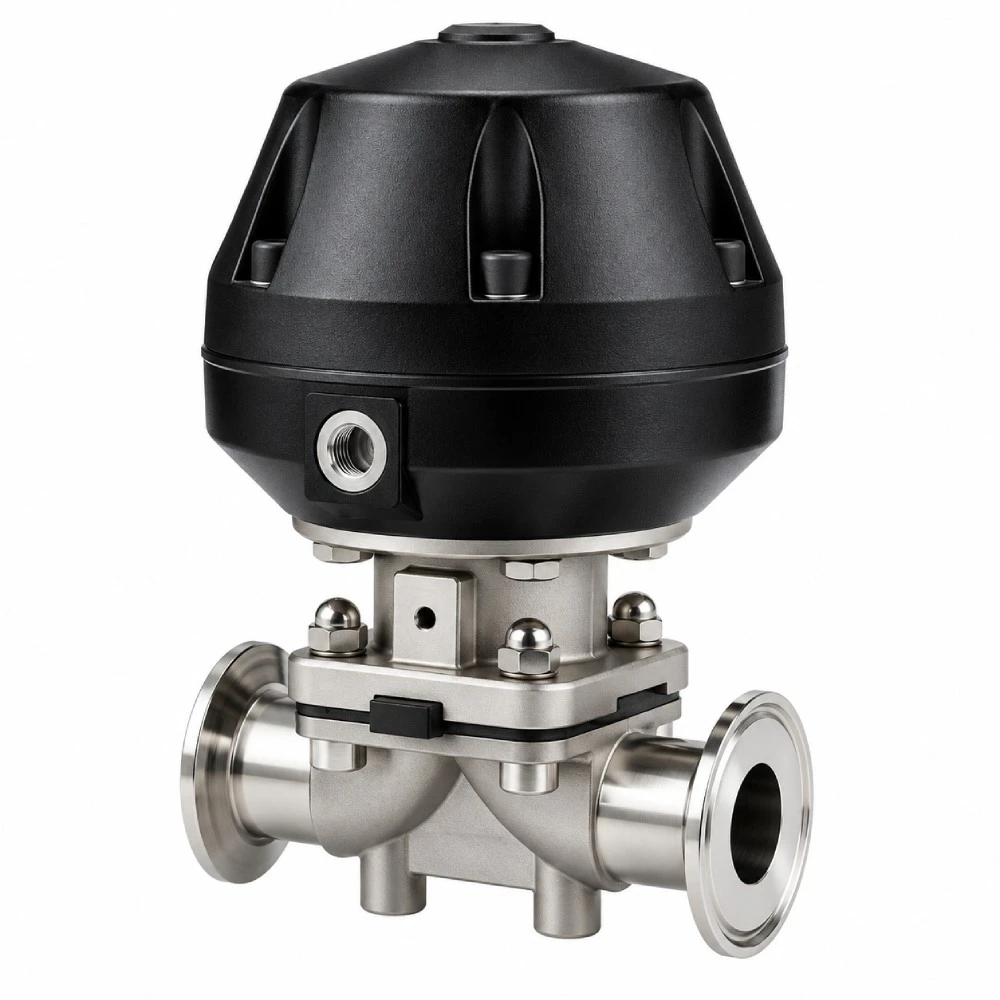
Sanitary Diaphragm Valve
Oystar sanitary diaphragm valves support hygienic flow control in dairy, food, beverage, pharmaceutical and compatible industrial processes. Contact Oystar Dairy Fittings to confirm specifications, material compatibility, sizes, pricing and supply availability.
Material Compliance & Dimensional Specifications
Standard dimensions and manufacturing tolerances adhering strictly to ASTM and sanitary standards:
Oystar Dairy Fittings offers sanitary diaphragm valves designed for hygienic fluid handling in dairy processing, food and beverage production, pharmaceutical manufacturing, biotechnology and other industries requiring clean and controlled process flow.
A sanitary diaphragm valve regulates, starts or stops the flow of liquids through a pipeline using a flexible diaphragm that moves against a valve seat. Depending on its design, the diaphragm helps isolate the operating mechanism from the process fluid, supporting hygienic operation and easier cleaning in suitable process systems.
Sanitary diaphragm valves are commonly considered for applications where product purity, controlled flow, reduced contamination risk and cleanability are important. They can be used in compatible hygienic pipeline systems carrying liquids, process solutions and other approved media.
Oystar sanitary diaphragm valves can be selected according to connection type, valve body material, diaphragm material, size, operating method, pressure rating and temperature requirements. Actual specifications should be confirmed against the selected model and the process conditions.
Whether you are looking for a sanitary diaphragm valve manufacturer, supplier, exporter or stockist, Oystar Dairy Fittings can assist with product selection for suitable hygienic process applications.
3. Applications of Sanitary Diaphragm Valves
Sanitary diaphragm valves are used in compatible process systems where hygienic flow control and isolation are essential.
- Flow control in dairy processing pipelines
- Milk, cream and other dairy product processing systems
- Food and beverage production lines
- Pharmaceutical and biotechnology process systems
- Hygienic water and process liquid distribution
- Cosmetic and personal care manufacturing
- Liquid transfer and process isolation
- Clean-in-place (CIP) systems, where compatible with the valve design
- Process lines requiring suitable cleanability and contamination control
- Filling, blending and liquid processing equipment
Application suitability depends on the valve design, diaphragm material, process fluid and operating conditions.
4. Industries Where Sanitary Diaphragm Valves Are Used
Dairy Industry: Used in suitable milk processing, cream handling, dairy ingredient production and hygienic pipeline installations.
Food Processing Industry: Suitable for compatible liquid food processing, mixing, transfer and production systems.
Beverage Industry: Used in selected beverage production and liquid distribution applications.
Pharmaceutical Industry: Considered for process systems requiring appropriate hygienic design and material compatibility.
Biotechnology Industry: Used in compatible process equipment where controlled fluid handling is required.
Cosmetics Industry: Suitable for selected liquid creams, lotions and personal care product manufacturing processes.
Chemical Processing: Used for compatible process media after confirming diaphragm and body material resistance.
Water Treatment and Utilities: Applicable to selected clean-fluid and process utility systems where the valve specifications meet operating requirements.
5. Benefits of Sanitary Diaphragm Valves
Hygienic flow control: Designed for suitable applications where cleanliness is important.
Fluid isolation: The diaphragm separates the operating mechanism from the process fluid in compatible designs.
Controlled operation: Supports opening, closing and flow regulation according to the valve design.
Reduced contamination risk: Appropriate construction and maintenance can help reduce process contamination risks.
Cleanability: Selected designs can support cleaning procedures compatible with the process system.
Material selection: Diaphragm and body materials can be chosen according to the process media and operating conditions.
Flexible installation: Available connection and operating configurations depend on the selected model.
Industrial versatility: Suitable for a range of hygienic processing applications when correctly specified.
Maintenance planning: The diaphragm may be replaceable on applicable models, helping support routine maintenance.
Process reliability: Correct valve selection and installation help support consistent operation.