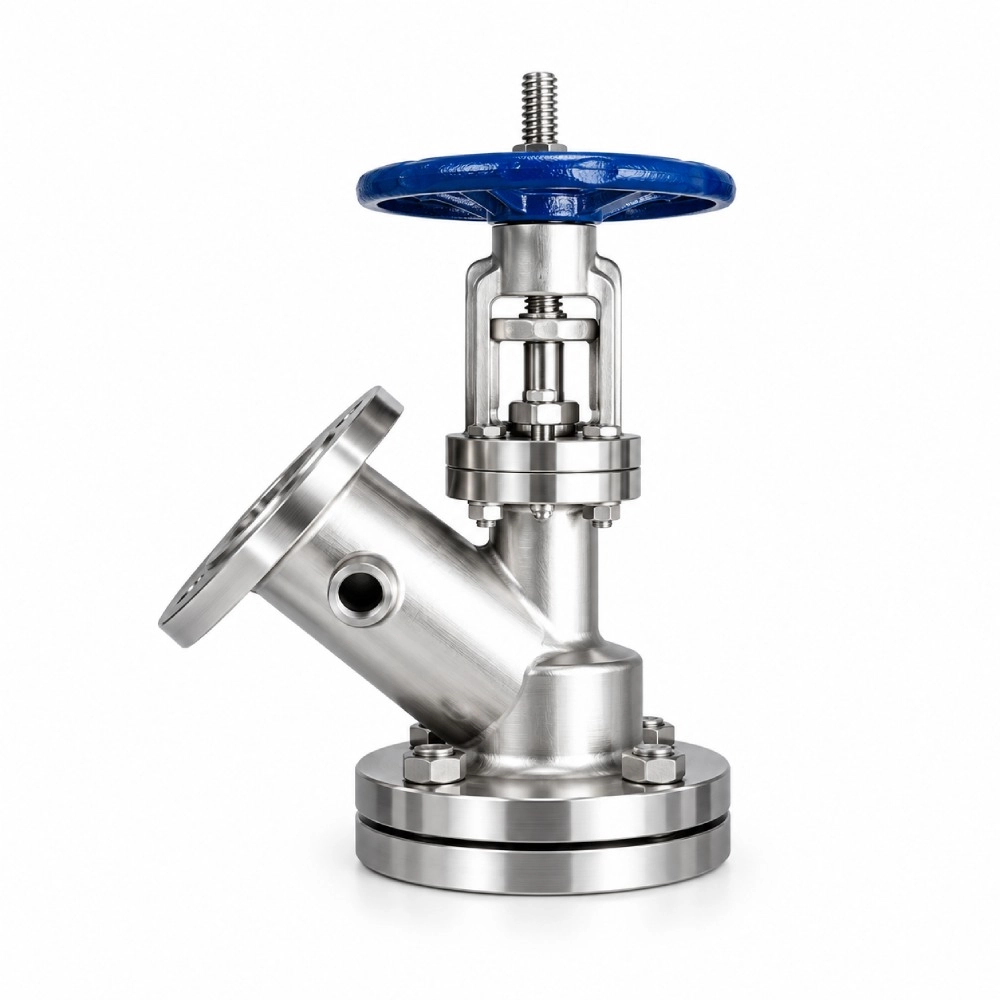
Sanitary Insulation Jacket Discharge Valve
Oystar Sanitary Insulation Jacket Discharge Valve is designed for compatible hygienic process systems requiring controlled discharge and temperature management. Suitable for selected dairy, food, beverage, pharmaceutical, and industrial applications. Confirm specifications and pricing with Oystar Dairy Fittings.
Material Compliance & Dimensional Specifications
Standard dimensions and manufacturing tolerances adhering strictly to ASTM and sanitary standards:
A Sanitary Insulation Jacket Discharge Valve is designed for hygienic process systems that require controlled product discharge and temperature management. Its insulated jacket helps maintain the temperature of compatible process fluids by allowing an appropriate heating or cooling medium to circulate around the valve body, depending on the selected design.
The valve is suitable for sanitary processing applications where temperature-sensitive products, hygienic handling, and reliable discharge are important. It can be considered for dairy processing, food and beverage production, pharmaceutical manufacturing, and other compatible hygienic process industries.
Oystar Dairy Fittings offers sanitary process equipment solutions under the Oystar brand for industrial buyers, plant engineers, equipment manufacturers, and process system integrators. The valve\\\'s body material, sealing arrangement, connection type, operating mechanism, pressure rating, temperature range, and jacket configuration should be confirmed according to the specific model and application.
When selecting a sanitary insulated discharge valve, buyers should consider the fluid being processed, operating temperature, cleaning requirements, process pressure, installation space, and compatibility with the existing pipeline or vessel.
3. Applications of Sanitary Insulation Jacket Discharge Valve
The Sanitary Insulation Jacket Discharge Valve can be considered for applications that require hygienic product discharge and temperature management.
Dairy processing: Discharge of compatible milk-based products, cream, and dairy mixtures.
Food processing: Transfer and discharge of temperature-sensitive food products.
Chocolate and confectionery: Applications involving products that require temperature control, subject to valve and seal compatibility.
Beverage production: Hygienic processing systems for suitable beverage ingredients and liquid products.
Pharmaceutical processing: Compatible hygienic process installations where controlled temperature and material compatibility are essential.
Cosmetic manufacturing: Processing systems handling compatible creams, lotions, and other viscous formulations.
Industrial process vessels: Discharge arrangements for tanks and vessels where jacketed valve construction suits the process.
Temperature-sensitive pipelines: Process installations that benefit from heating or cooling around the valve body.
Actual suitability depends on product viscosity, fluid characteristics, cleaning procedures, and the valve\\\'s rated operating conditions.
4. Industries Where the Product Is Used
- Dairy and milk processing plants
- Food manufacturing industries
- Beverage and liquid food processing plants
- Chocolate and confectionery manufacturers
- Pharmaceutical manufacturing facilities
- Biotechnology and hygienic process facilities
- Cosmetics and personal care manufacturers
- Specialty ingredient processing plants
- Chemical processing facilities requiring compatible sanitary equipment
- Industrial tank and vessel fabrication companies
5. Benefits of Sanitary Insulation Jacket Discharge Valve
Temperature management: The jacket can support heating or cooling around the valve body when connected to a compatible temperature-control system.
Controlled discharge: Helps manage product discharge in suitable process installations.
Hygienic process integration: Designed for consideration in sanitary process systems.
Reduced local temperature variation: Appropriate jacket circulation may help limit unwanted temperature differences around the valve.
Process flexibility: Can be selected for compatible liquids and temperature-sensitive products.
Equipment integration: May be incorporated into suitable tanks, vessels, and sanitary pipelines.
Application-specific selection: Material, sealing, connection, and operating options can be evaluated against process needs.
Industrial versatility: Useful across compatible dairy, food, beverage, pharmaceutical, and cosmetic processing applications.