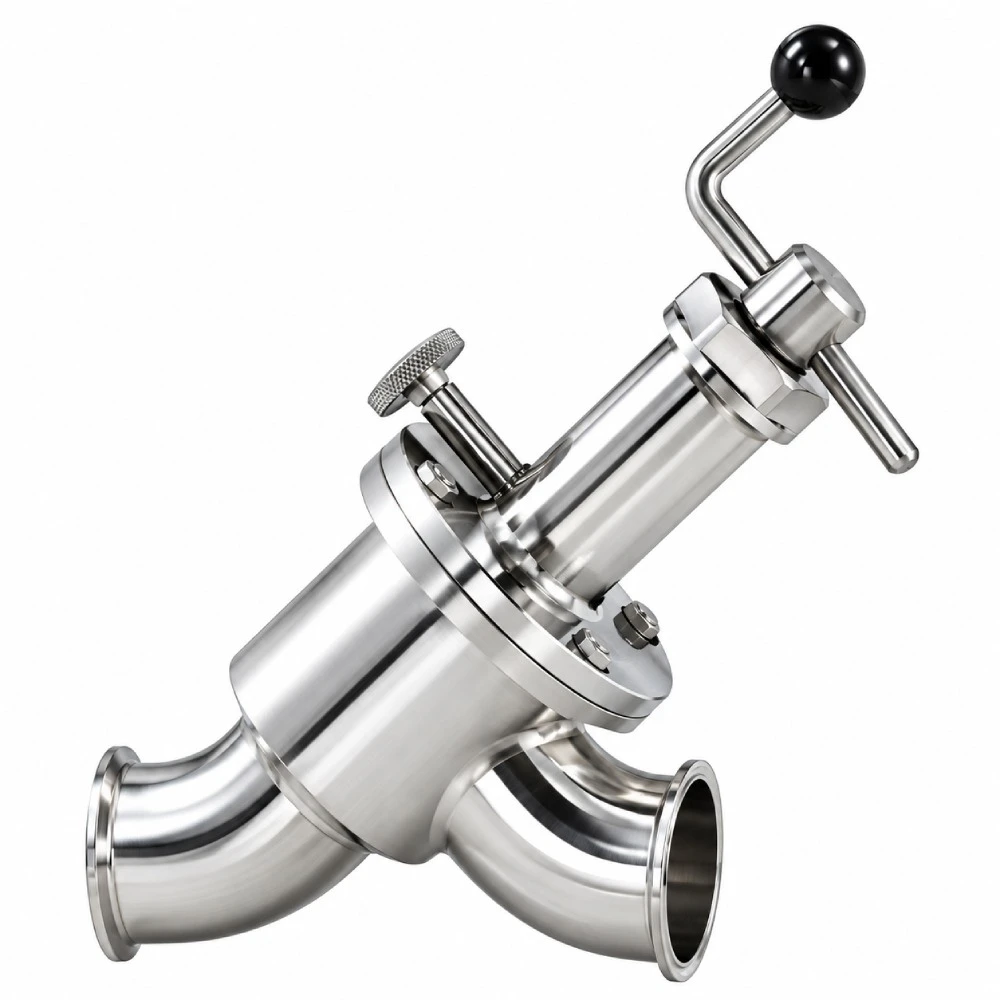
Sanitary Manual Regulating Valve
Oystar Sanitary Manual Regulating Valve helps operators adjust liquid flow in compatible hygienic process pipelines. Suitable for selected dairy, food, beverage and liquid processing applications. Contact Oystar Dairy Fittings to confirm specifications, availability and price.
Material Compliance & Dimensional Specifications
Standard dimensions and manufacturing tolerances adhering strictly to ASTM and sanitary standards:
Oystar Sanitary Manual Regulating Valve is designed to help control and adjust the flow of liquids in hygienic process pipelines. It is suitable for applications where operators need manual control over process flow in dairy, food processing, beverage production and other hygiene-sensitive industries.
A sanitary manual regulating valve allows an operator to adjust the valve opening according to process requirements. Depending on the selected design, it can help regulate product flow, support consistent processing conditions and provide convenient manual operation during production, cleaning and maintenance.
Manufactured and supplied according to the selected model and customer requirements, Oystar sanitary valves are intended for compatible hygienic pipeline systems. Material grade, connection type, operating range, pressure rating, temperature limits and sealing materials should be confirmed before ordering to ensure suitability for the intended application.
Oystar Dairy Fittings serves industrial buyers looking for sanitary manual regulating valve manufacturers, suppliers, exporters and stockists in India and selected Gulf markets, subject to order acceptance and delivery availability.
3. Applications of Sanitary Manual Regulating Valves
Sanitary manual regulating valves can be used in suitable process systems for:
- Adjusting liquid flow in hygienic pipelines.
- Regulating product transfer during dairy processing.
- Controlling flow to compatible processing equipment.
- Adjusting flow in food and beverage production lines.
- Supporting process control in liquid mixing and transfer systems.
- Managing flow in selected filling and packaging applications.
- Controlling liquid movement between compatible tanks and process equipment.
- Supporting maintenance and process adjustments in sanitary installations.
The valve must be selected according to the liquid properties, required flow characteristics, operating conditions and hygienic design requirements.
4. Industries Where the Product Is Used
Dairy Processing Industry: Suitable for compatible milk processing, cream handling, dairy ingredient transfer and other hygienic liquid systems.
Food Processing Industry: Used in suitable food production and liquid ingredient handling lines where hygienic pipeline components are required.
Beverage Industry: Can be considered for compatible juice, syrup, beverage ingredient and other liquid processing applications.
Pharmaceutical Industry: May be suitable for selected process applications when the valve design, material certification, surface finish and cleaning requirements meet the facility specifications.
Cosmetics and Personal Care: Can be considered for compatible liquid product processing, subject to chemical compatibility and hygiene requirements.
Industrial Liquid Processing: Used in suitable hygienic or clean-process installations that require manually adjustable liquid flow.
5. Benefits of Sanitary Manual Regulating Valves
Manual flow adjustment: Allows operators to change the valve opening according to process needs.
Operator control: Provides direct control without requiring an automated actuator.
Process flexibility: Supports adjustments across compatible liquid processing operations.
Hygienic system compatibility: Designed for use in appropriate sanitary pipeline configurations.
Convenient operation: Manual adjustment can be useful in systems requiring local operator intervention.
Maintenance planning: The selected design can be evaluated for ease of inspection and servicing.
Application versatility: Can serve compatible dairy, food, beverage and other processing systems.
Specification-based selection: Different material, seal and connection options may be available depending on the model.
Actual performance, cleanability and service life depend on the valve design, installation, operating conditions and maintenance practices.