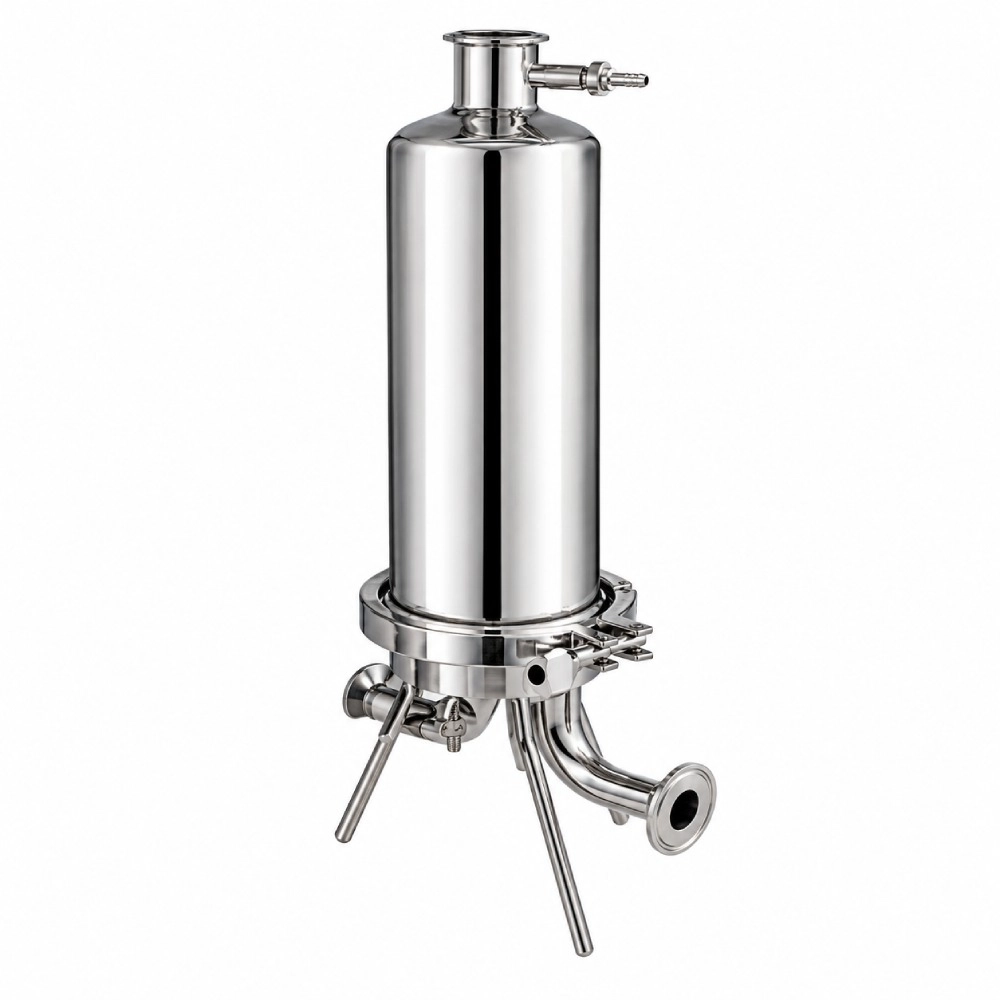
Sanitary Microporous Membrane Filter
Oystar Sanitary Microporous Membrane Filter is designed for fine filtration of compatible process liquids in hygienic applications. Suitable membrane pore size, materials, and operating limits should be confirmed for dairy, food, beverage, pharmaceutical, and industrial requirements.
Material Compliance & Dimensional Specifications
Standard dimensions and manufacturing tolerances adhering strictly to ASTM and sanitary standards:
A Sanitary Microporous Membrane Filter is a filtration component designed to separate fine particles and, depending on the membrane specification, microorganisms from liquids in hygienic processing systems. It uses a microporous membrane with a defined pore size to help improve liquid clarity, process consistency, and product quality.
Oystar Dairy Fittings offers sanitary filtration solutions for applications where hygiene, controlled filtration, and compatibility with process equipment are important. A sanitary microporous membrane filter can be selected according to the liquid being processed, required filtration rating, operating conditions, and connection requirements.
Depending on the membrane material and pore size, these filters may be used for pre-filtration, fine filtration, clarification, or microbial reduction. Sterilizing-grade performance must be confirmed for the specific membrane and validated operating conditions. A filter should not be assumed to remove all microorganisms unless its rating and validation support that claim.
The filter can be considered for dairy processing, beverage production, food manufacturing, pharmaceutical processing, biotechnology, and other compatible hygienic applications. Buyers should verify the membrane material, housing construction, chemical compatibility, pressure rating, temperature limits, and cleaning or sterilization method before selecting a model.
3. Applications of Sanitary Microporous Membrane Filter
Dairy processing: Filtration of compatible dairy process liquids and ingredients.
Beverage production: Fine filtration of suitable beverage liquids and ingredients.
Food processing: Filtration of process water, liquid ingredients, and other compatible food products.
Pharmaceutical processing: Liquid filtration where the selected membrane meets applicable process requirements.
Biotechnology: Filtration of compatible process liquids and solutions.
Water treatment: Fine filtration in suitable process water systems.
Chemical processing: Filtration of compatible liquids after checking membrane and seal compatibility.
Laboratory applications: Filtration of suitable liquids where the required pore size and flow rate are established.
4. Industries Where the Product Is Used
- Dairy and milk processing plants
- Cheese, yoghurt, and other dairy product manufacturers
- Food processing and packaging companies
- Juice, beverage, and bottled-water manufacturers
- Pharmaceutical manufacturing facilities
- Biotechnology and life-science companies
- Cosmetics and personal-care manufacturers
- Industrial liquid-processing plants
- Water treatment and purification facilities
- Research laboratories and quality-control facilities
5. Benefits of a Sanitary Microporous Membrane Filter
Fine filtration: Helps retain particles according to the selected membrane\\\\\\\'s pore size.
Improved liquid quality: Can help reduce unwanted suspended particles in compatible process liquids.
Process consistency: Supports repeatable filtration when operated within specified conditions.
Hygienic processing: Suitable for hygienic systems when the complete filter assembly meets the required sanitary standards.
Application flexibility: Membrane options can be selected for different liquids and filtration objectives.
Equipment integration: Can be incorporated into compatible filtration lines and process systems.
Quality control: Helps support defined filtration procedures and product-quality requirements.
Maintenance planning: Replaceable elements, where available, can support planned filter maintenance.