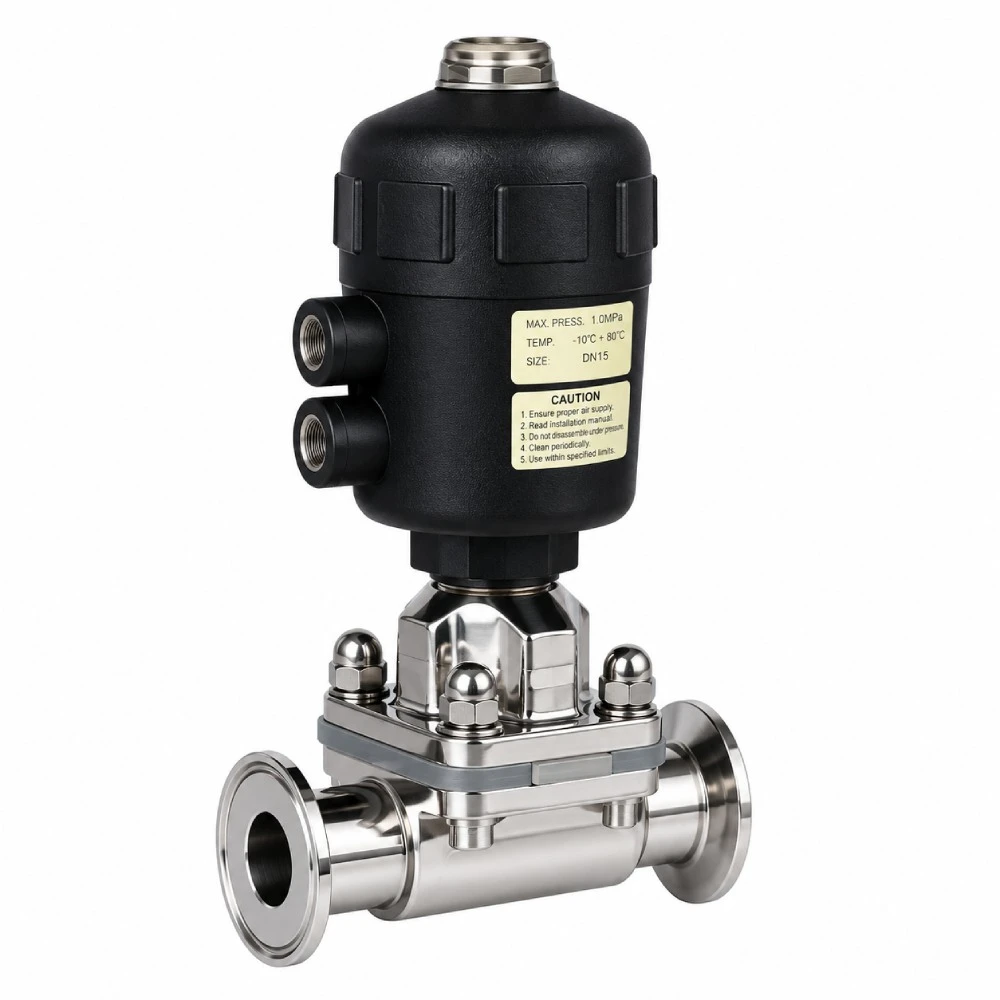
Sanitary Pneumatic Quick-install Diaphragm Valve
Oystar Sanitary Pneumatic Quick-Install Diaphragm Valve supports hygienic flow isolation and automated operation in compatible dairy, food, beverage and industrial process systems. Contact Oystar Dairy Fittings to confirm specifications, availability and pricing.
Material Compliance & Dimensional Specifications
Standard dimensions and manufacturing tolerances adhering strictly to ASTM and sanitary standards:
The Sanitary Pneumatic Quick-Install Diaphragm Valve by Oystar is designed for hygienic process systems that require controlled fluid flow, reliable shut-off and convenient installation. It combines pneumatic actuation with a sanitary diaphragm valve design, making it suitable for automated processing lines where cleanliness, operational consistency and ease of maintenance are important.
The pneumatic actuator enables the valve to open and close using a compressed-air control system, reducing the need for manual operation. Its quick-install connection supports convenient installation and removal in compatible sanitary piping arrangements. The diaphragm separates the process fluid from the operating mechanism, helping support hygienic process requirements when the valve is correctly selected, installed and maintained.
Oystar Sanitary Pneumatic Quick-Install Diaphragm Valves are intended for applications where process hygiene, automation and dependable flow control are priorities. The valve\\\\\\\'s body material, diaphragm material, connection dimensions, pressure rating, operating temperature and actuator configuration should be confirmed according to the selected model and application requirements.
3. Applications of Sanitary Pneumatic Quick-Install Diaphragm Valves
Oystar sanitary pneumatic diaphragm valves can be considered for suitable hygienic process applications, including:
- Automated liquid transfer and flow-control systems.
- Dairy processing and milk-handling pipelines.
- Food and beverage production lines.
- Hygienic process equipment and sanitary piping assemblies.
- Liquid ingredient dosing and process isolation.
- Pharmaceutical and biotechnology process systems, where the selected model meets applicable requirements.
- Cleaning and process utility lines, subject to material and temperature compatibility.
- Automated production systems requiring pneumatic valve operation.
Always verify product compatibility with the process fluid, cleaning chemicals, pressure, temperature and required hygiene standards before installation.
4. Industries Where the Product Is Used
Dairy Industry: Used in suitable milk, cream, yoghurt and other dairy-processing systems where hygienic flow control is required.
Food Processing Industry: Applicable to compatible liquid food ingredients, processing lines and hygienic fluid transfer systems.
Beverage Industry: Can be specified for suitable beverage production and liquid handling processes.
Pharmaceutical Industry: May be used in pharmaceutical process equipment when the selected materials, finish, design and documentation satisfy the facility\\\\\\\'s requirements.
Biotechnology Industry: Suitable for selected hygienic fluid-handling applications, subject to process validation and compatibility.
Cosmetics and Personal Care: Can be considered for compatible liquid formulations, creams and other process materials, depending on the valve design and seal selection.
Chemical and Specialty Liquid Processing: May be suitable for compatible process fluids after checking chemical resistance, operating limits and manufacturer specifications.
5. Benefits of the Product
Pneumatic operation: Supports automated opening and closing through a compatible compressed-air control system.
Hygienic valve design: The diaphragm arrangement can help isolate the process fluid from the actuator mechanism.
Quick installation: Compatible quick-install connections can simplify assembly and removal.
Process control: Supports flow isolation and control within appropriately designed process systems.
Reduced manual operation: Pneumatic actuation can reduce the need for repeated manual valve operation.
Maintenance convenience: The valve may be easier to inspect or service depending on its construction and installation.
Flexible integration: Can be incorporated into compatible automated process lines.
Application-specific selection: Material and actuator options can be selected according to process requirements, where offered.
Industrial versatility: Can serve multiple hygienic fluid-handling sectors when the selected model is suitable.