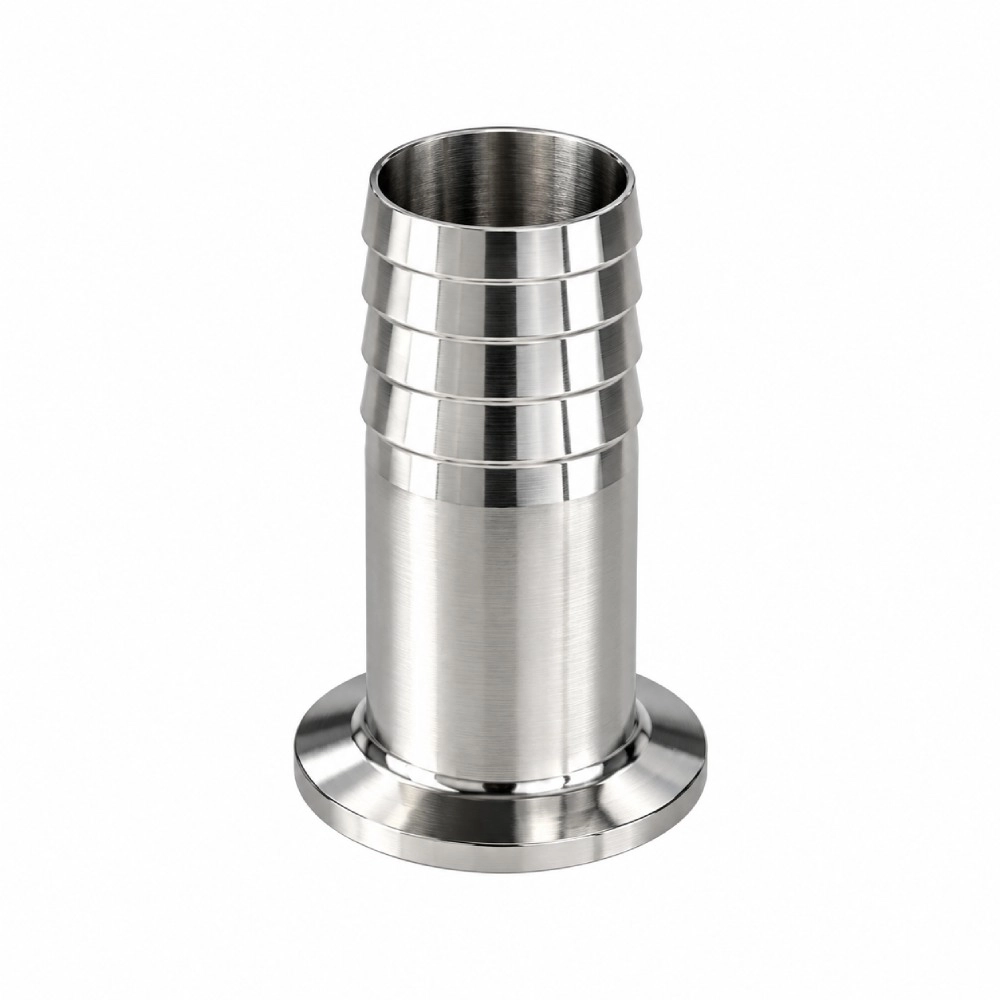
Sanitary Quick-release Hose Connector
Oystar sanitary quick-release hose connectors from Oystar Dairy Fittings are designed for convenient hose connections in compatible dairy, food, beverage and industrial fluid-transfer systems. Enquire about sizes, materials, specifications and pricing.
Material Compliance & Dimensional Specifications
Standard dimensions and manufacturing tolerances adhering strictly to ASTM and sanitary standards:
Oystar Dairy Fittings offers sanitary quick-release hose connectors designed to provide convenient, secure and efficient connections between hoses and compatible pipeline systems. These connectors are suitable for hygienic fluid-transfer applications where quick installation, disconnection, cleaning and maintenance are important.
A sanitary quick-release hose connector helps reduce the time required to connect or disconnect hoses during product transfer, equipment cleaning and routine maintenance. Depending on the selected design, it may incorporate a quick-locking mechanism, sanitary sealing components and compatible end connections to support reliable operation.
Oystar sanitary quick-release hose connectors are intended for use in applications involving milk, dairy ingredients, food-processing liquids, beverages and other compatible process fluids. The actual suitability depends on the connector design, body material, seal material, operating pressure, temperature and fluid characteristics.
Businesses looking for sanitary quick-release hose connector manufacturers, suppliers, exporters or stockists can contact Oystar Dairy Fittings to discuss product specifications, connection compatibility and supply requirements.
3. Applications of Sanitary Quick-Release Hose Connectors
Sanitary quick-release hose connectors can be used in various fluid-handling and hygienic processing applications, including:
- Connecting flexible hoses to compatible sanitary pipelines.
- Milk collection, transfer and processing systems.
- Dairy ingredient and liquid food transfer.
- Beverage production and liquid handling.
- Connecting hoses to compatible processing equipment and tanks.
- Cleaning and maintenance operations requiring frequent hose disconnection.
- Hygienic process lines where easy access and connection changes are required.
- Liquid transfer systems in food, pharmaceutical and biotechnology facilities, subject to applicable hygiene requirements.
4. Industries Where the Product Is Used
Dairy Industry: Milk transfer, cream handling, dairy processing and compatible liquid ingredient systems.
Food Processing Industry: Hygienic transfer of sauces, edible oils, liquid ingredients and other compatible food products.
Beverage Industry: Liquid beverage processing, ingredient transfer and production-line hose connections.
Pharmaceutical Industry: Compatible fluid-transfer systems where the connector materials, design and documentation meet the application\\\'s required standards.
Biotechnology Industry: Suitable process-fluid connections where the selected equipment meets the required hygienic and operational specifications.
Cosmetics and Personal Care: Transfer of compatible liquid formulations during manufacturing and processing.
Industrial Processing: Fluid-handling systems that require convenient hose connections and disconnections.
5. Benefits of Sanitary Quick-Release Hose Connectors
Quick Connection: Helps simplify hose installation and removal.
Reduced Maintenance Time: Convenient disconnection can support faster inspection and equipment servicing.
Operational Convenience: Suitable for applications requiring frequent hose changes.
Hygienic Design Options: Appropriate sanitary designs can support cleaning and contamination-control procedures.
Reliable Sealing: Compatible seals help minimize leakage when correctly selected, installed and maintained.
Flexible Applications: Can be specified for different hose sizes and compatible process connections.
Improved Workflow: Helps simplify routine cleaning, maintenance and production changeovers.
Long-Term Value: Selecting suitable materials and seals can support service life and reduce avoidable maintenance.
Actual performance depends on the selected model, installation method, process conditions and maintenance practices.