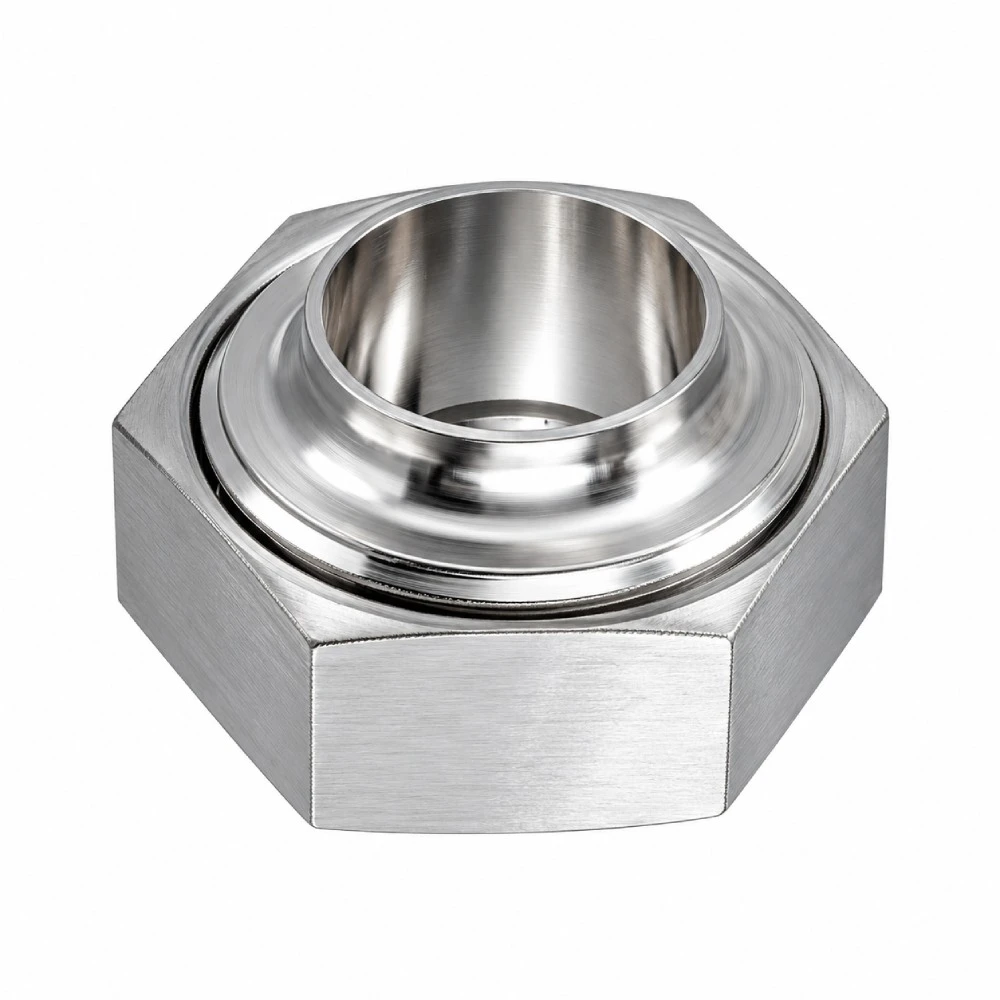
Sanitary RJT Union
Oystar Sanitary RJT Union is designed for compatible hygienic pipeline connections in dairy, food, beverage, and process industries. Contact Oystar Dairy Fittings to confirm sizes, material grades, gasket options, specifications, and pricing.
Material Compliance & Dimensional Specifications
Standard dimensions and manufacturing tolerances adhering strictly to ASTM and sanitary standards:
The Oystar Sanitary RJT Union is a hygienic pipeline fitting designed to connect pipes, valves, pumps, tanks, and processing equipment in sanitary fluid-handling systems. RJT stands for Ring Joint Type, a union connection commonly used in dairy and food-processing applications where secure connections and convenient dismantling for cleaning and maintenance are important.
Manufactured according to the selected design and material specifications, a sanitary RJT union typically consists of compatible union components, a threaded retaining arrangement, and a sealing ring or gasket. The connection helps create a reliable joint when assembled with compatible RJT components and the appropriate seal.
Oystar Sanitary RJT Unions are suitable for evaluating and specifying pipeline connections in dairy plants, beverage production facilities, food-processing units, and other hygienic process environments. Buyers should confirm the connection standard, nominal size, material grade, gasket material, pressure rating, and temperature limits before ordering.
Oystar Dairy Fittings serves industrial buyers looking for sanitary pipe fittings, dairy pipeline components, and hygienic connection solutions. The product can be specified according to the application requirements and the compatibility of the existing pipeline system.
3. Applications of Sanitary RJT Union
- The Sanitary RJT Union is used wherever hygienic pipeline connections need to be assembled, inspected, disconnected, or maintained.
- Dairy processing pipelines: Connecting compatible pipelines used for milk and dairy-product transfer.
- Food processing equipment: Connecting process lines for suitable liquid food products.
- Beverage manufacturing: Supporting pipeline connections in beverage production and handling systems.
- Storage tanks: Connecting compatible sanitary fittings to processing and storage equipment.
- Pumps and valves: Joining pipeline sections around compatible pumps, valves, and process equipment.
- Cleaning and maintenance systems: Allowing suitable pipeline sections to be dismantled for inspection and cleaning.
- Hygienic process installations: Providing removable connections where the selected design meets the required sanitation standards.
4. Industries Where Sanitary RJT Unions Are Used
- Dairy and milk processing plants
- Cheese, butter, and yoghurt manufacturing units
- Ice cream production facilities
- Food and beverage processing industries
- Juice and liquid food manufacturing plants
- Pharmaceutical and biotechnology facilities, where the fitting meets the required hygienic specifications
- Personal care and cosmetic manufacturing
- Industrial liquid processing and packaging plants
- Dairy equipment manufacturing
- Hygienic process engineering and plant installation
5. Benefits of Sanitary RJT Union
Convenient disassembly: Supports maintenance and inspection when used in a compatible union assembly.
Reliable connection: Provides a secure joint when correctly assembled with compatible components and seals.
Hygienic application suitability: Can be specified for suitable sanitary processing systems.
Maintenance convenience: Helps simplify access to pipeline sections requiring servicing.
Equipment compatibility: Can connect compatible pipes and process equipment designed for RJT connections.
Flexible system integration: Useful in new installations and suitable modifications to existing pipelines.
Material selection: Allows buyers to select a suitable material and gasket combination according to the application.
Industrial versatility: Suitable for evaluating across dairy, food, beverage, and other appropriate hygienic process applications.
Actual hygiene performance, cleanability, corrosion resistance, and operating limits depend on the selected product design, materials, surface finish, installation, and cleaning procedure.