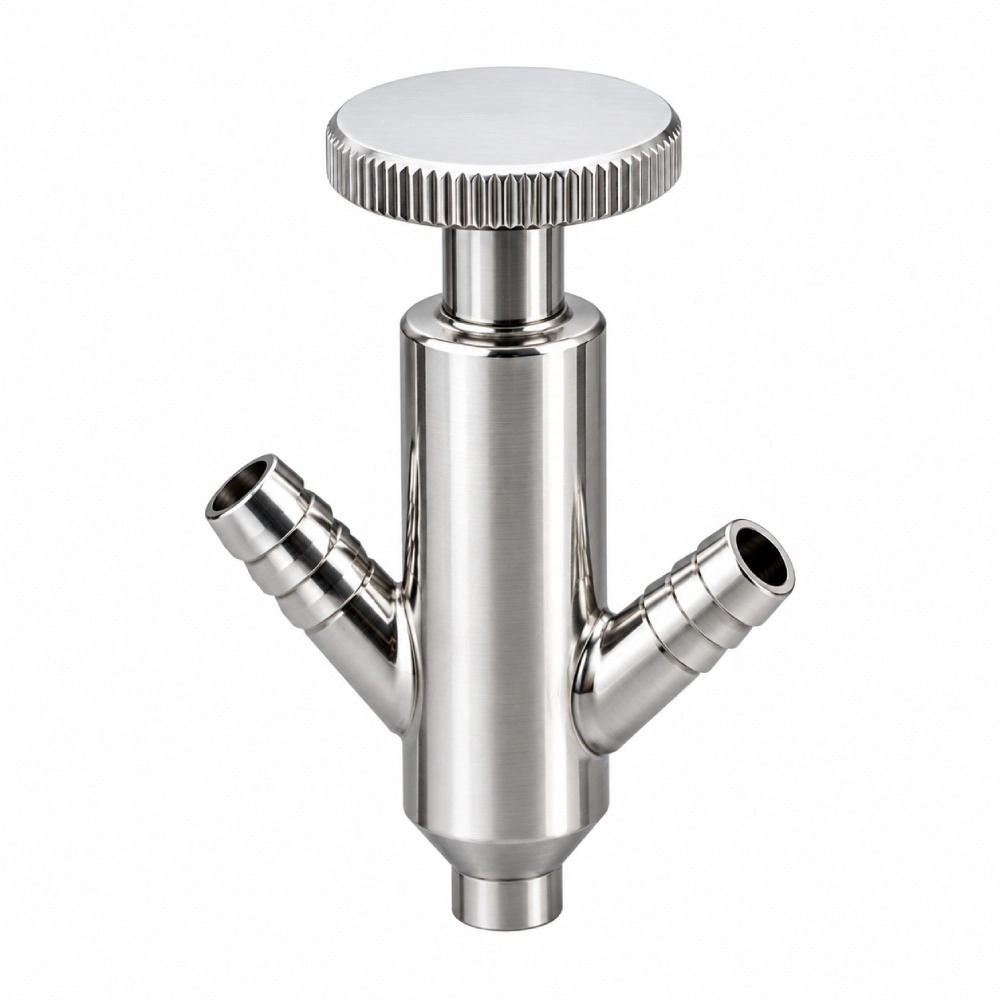
Sanitary Sampling Valve
Oystar Sanitary Sampling Valve by Oystar Dairy Fittings supports hygienic sample collection from compatible pipelines, tanks, and process equipment. Suitable for dairy, food, beverage, and other hygienic industries, subject to model specifications and application requirements.
Material Compliance & Dimensional Specifications
Standard dimensions and manufacturing tolerances adhering strictly to ASTM and sanitary standards:
A Sanitary Sampling Valve is a hygienic process valve designed to collect liquid or product samples from pipelines, tanks, vessels, and processing equipment. It helps operators obtain representative samples for quality testing, laboratory analysis, process monitoring, and contamination control while supporting hygienic production practices.
The Oystar Sanitary Sampling Valve is intended for applications where product quality, cleanliness, and controlled sample collection are important. Depending on the selected model, the valve may be suitable for dairy processing, food and beverage production, pharmaceutical manufacturing, biotechnology, and other hygienic process industries.
Sanitary sampling valves can be configured with different connection types, body materials, sealing materials, and operating mechanisms. Selection should be based on the process medium, cleaning requirements, operating pressure, temperature, and applicable hygiene standards.
Oystar, from Oystar Dairy Fittings, serves industrial buyers seeking sanitary process components for hygienic production systems. Contact the company to confirm the available model, technical specifications, compatibility, and pricing.
3. Applications of Sanitary Sampling Valve
Sanitary sampling valves are used wherever process samples must be collected for inspection, testing, and quality assurance.
Dairy processing: Collect samples of milk, cream, whey, curd, and other dairy products.
Food production: Obtain samples from liquid food processing lines and storage tanks.
Beverage manufacturing: Support sampling of juices, syrups, water, and other compatible beverages.
Pharmaceutical processing: Collect process samples where the selected valve meets applicable hygiene and validation requirements.
Biotechnology: Support sampling from compatible process vessels and pipelines.
Quality control laboratories: Provide samples for composition, purity, microbial, and other laboratory tests.
Process monitoring: Help operators verify product consistency at different stages of production.
4. Industries Where the Product Is Used
- Dairy and milk processing plants
- Food processing and packaging industries
- Beverage and juice manufacturing facilities
- Pharmaceutical manufacturing units
- Biotechnology and life science facilities
- Personal care and cosmetics manufacturing
- Nutraceutical and health product production
- Industrial hygienic fluid processing plants
- Research laboratories and pilot plants
The actual suitability of a sampling valve depends on the product being sampled, hygiene requirements, cleaning procedures, and the valve\\\'s verified specifications.
5. Benefits of Sanitary Sampling Valve
Hygienic sample collection: Supports controlled sampling in applications where product cleanliness is important.
Quality control: Helps manufacturers evaluate product composition, consistency, and quality during production.
Reduced contamination risk: A suitable hygienic design and proper operating procedure can reduce the risk of introducing contaminants during sampling.
Process monitoring: Enables routine sampling from selected points in a pipeline or vessel.
Operational convenience: The appropriate valve design can make sample collection easier for production and quality-control personnel.
Integration with process systems: Available connection configurations may allow installation in compatible sanitary pipelines and tanks.
Flexible selection: Different material, connection, and sealing options can accommodate varying process requirements.
Maintenance planning: Selecting a valve with suitable materials and accessible components can support cleaning and maintenance procedures.