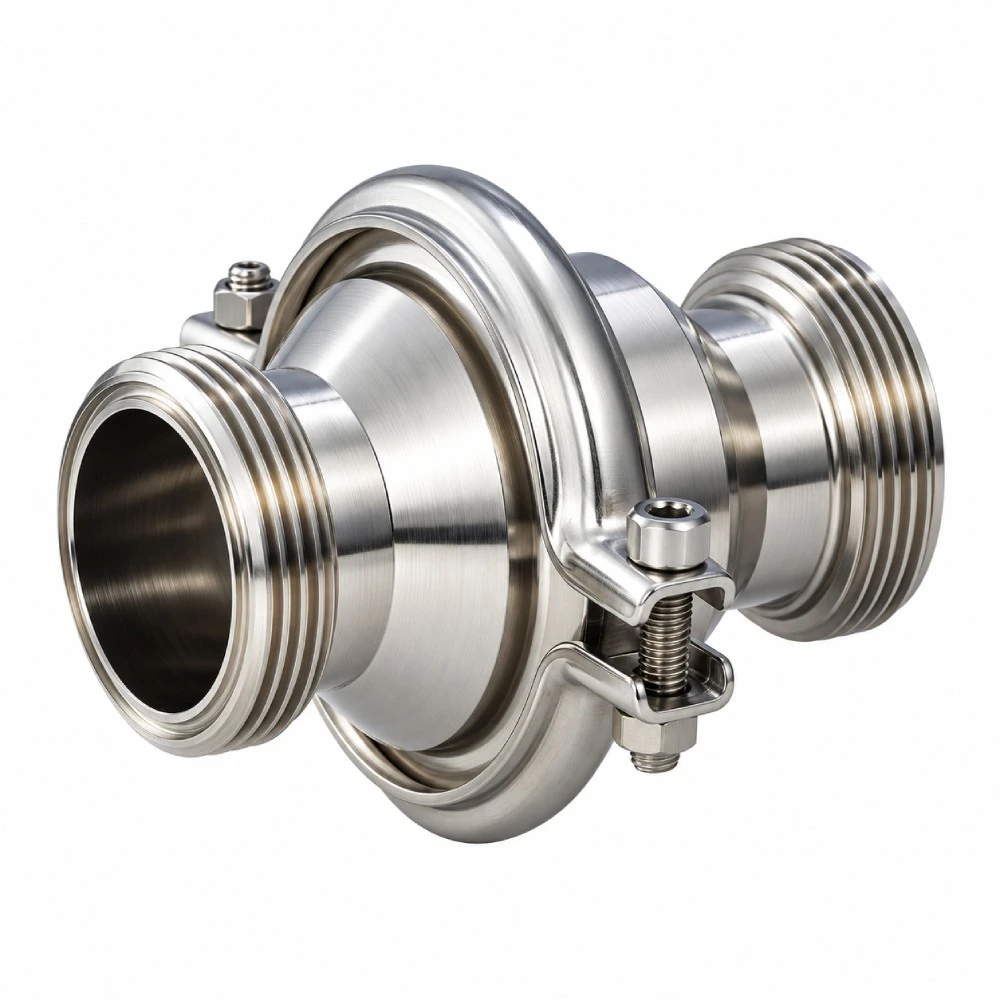
Sanitary Threaded Check Valve
Oystar Sanitary Threaded Check Valve helps control reverse flow in compatible fluid-processing systems. Suitable for selected dairy, food, beverage, and industrial applications. Contact Oystar Dairy Fittings for specifications, availability, and pricing.
Material Compliance & Dimensional Specifications
Standard dimensions and manufacturing tolerances adhering strictly to ASTM and sanitary standards:
A Sanitary Threaded Check Valve is a flow-control component designed to allow fluid to move in one direction while helping prevent reverse flow in a pipeline. It is used in hygienic process systems where maintaining flow direction, reducing backflow risks, and supporting efficient operation are important.
Oystar Sanitary Threaded Check Valves are intended for compatible sanitary and industrial fluid-handling applications. The threaded connection provides a practical installation option for suitable pipeline configurations, helping simplify assembly, inspection, maintenance, and replacement when the valve design permits.
These valves can be considered for dairy processing, food and beverage production, pharmaceutical processing, and other applications requiring appropriate fluid-control components. Selection should be based on the process fluid, required flow rate, operating pressure, temperature, connection standard, and cleaning requirements.
Oystar Dairy Fittings serves buyers looking for sanitary valve solutions, subject to the selected model, order acceptance, and delivery availability.
3. Applications of Sanitary Threaded Check Valve
Sanitary Threaded Check Valves can be used in compatible fluid-handling systems where reverse flow needs to be controlled.
- Dairy product transfer and processing lines
- Milk handling and processing equipment
- Food and beverage production pipelines
- Liquid ingredient transfer systems
- Beverage processing and filling systems
- Water and compatible process-fluid lines
- Pharmaceutical and hygienic process equipment, where the selected valve meets applicable requirements
- Pump discharge lines requiring backflow prevention
- Process skids and equipment assemblies
- Industrial fluid-handling systems compatible with the valve\\\\\\\'s design and materials
- The suitability of the valve depends on the process, cleaning method, fluid properties, and installation requirements.
4. Industries Where the Product Is Used
- Dairy Industry: Used in compatible milk collection, transfer, and processing systems to help maintain the intended direction of fluid flow.
- Food Processing Industry: Suitable for selected liquid food applications where hygienic design and material compatibility are essential.
- Beverage Industry: Can be considered for compatible beverage processing, transfer, and production equipment.
- Pharmaceutical Industry: May be used in suitable process systems when material specifications, cleanability, and required regulatory standards are satisfied.
- Biotechnology and Process Equipment: Used in compatible fluid-handling assemblies where one-way flow control is required.
- Industrial Manufacturing: Applicable to selected liquid transfer and process systems according to the valve\\\\\\\'s specifications.
5. Benefits of Sanitary Threaded Check Valve
Backflow Control: Helps prevent reverse flow under suitable operating conditions.
Process Protection: Supports the protection of connected equipment from unwanted reverse fluid movement.
Threaded Connection: Provides a convenient connection option for compatible pipeline designs.
Installation Convenience: Can simplify installation in suitable threaded piping arrangements.
Reduced Manual Intervention: Automatic operation helps control flow direction without routine manual valve operation.
Maintenance Planning: Inspection and servicing can be planned according to the valve design and operating conditions.
Process Reliability: Helps support consistent fluid movement when correctly selected and installed.
Application Flexibility: Available designs may serve different process requirements, depending on material, size, and pressure specifications.
Actual performance depends on valve construction, installation orientation, operating conditions, and maintenance.