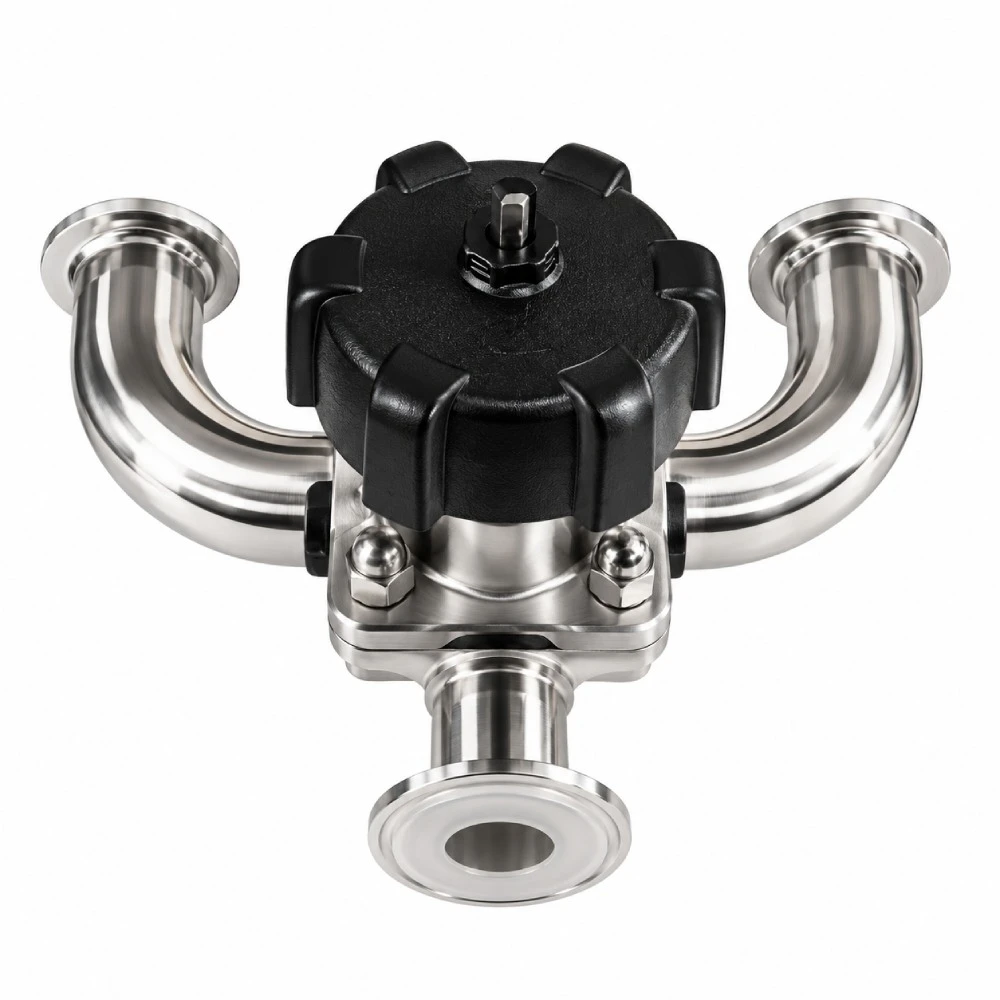
Sanitary U-type Diaphragm Valve
Oystar Sanitary U-Type Diaphragm Valve for suitable hygienic fluid-handling applications in dairy, food, beverage and other process industries. Contact Oystar Dairy Fittings to confirm specifications, availability, and pricing.plication.
Material Compliance & Dimensional Specifications
Standard dimensions and manufacturing tolerances adhering strictly to ASTM and sanitary standards:
A Sanitary U-Type Diaphragm Valve is a hygienic flow-control valve designed to regulate, start, or stop the movement of liquids in sanitary processing pipelines. Its U-type body configuration is designed for applications where hygienic fluid handling, easy cleaning, and reliable flow isolation are important.
Manufactured for suitable sanitary process systems, this valve uses a flexible diaphragm to control the flow of media while separating the operating mechanism from the process fluid. Its design can help reduce areas where product residue may accumulate when the valve is correctly selected, installed, and maintained.
Oystar Dairy Fittings offers the Oystar brand for buyers looking for sanitary valve solutions for dairy processing, food and beverage production, pharmaceutical manufacturing, and other hygienic process industries.
The Sanitary U-Type Diaphragm Valve can be considered for liquid transfer, process-line isolation, and flow-control applications. Actual suitability depends on the valve design, diaphragm material, body material, connection type, operating pressure, temperature, and compatibility with the cleaning process.
Businesses searching for a Sanitary U-Type Diaphragm Valve manufacturer, supplier, exporter, stockist, or online price can contact Oystar Dairy Fittings to confirm the available model and technical specifications.
3. Applications of Sanitary U-Type Diaphragm Valves
Sanitary U-Type Diaphragm Valves can be used in hygienic processing systems where controlled fluid flow and process isolation are required.
Common applications include:
- Dairy liquid transfer and processing lines.
- Milk, cream, and other compatible dairy product handling.
- Food and beverage processing pipelines.
- Hygienic liquid transfer systems.
- Pharmaceutical process equipment, where the selected model meets the required standards.
- Cosmetic and personal-care manufacturing processes.
- Process-line isolation during production, cleaning, and maintenance.
- Hygienic production skids and liquid-handling equipment.
- Selected clean-in-place (CIP) systems, subject to valve design and compatibility.
- Industrial process applications requiring a suitable diaphragm valve configuration.
The valve must be selected according to the fluid\\\\\\\'s properties, cleaning chemicals, operating conditions, and applicable industry requirements.
4. Industries Where Sanitary U-Type Diaphragm Valves Are Used
Dairy Industry: Used in compatible milk-processing, cream-handling, and dairy production systems.
Food Processing Industry: Suitable for selected hygienic liquid-handling applications in food manufacturing.
Beverage Industry: Can be considered for beverage processing and liquid transfer lines when the materials meet the process requirements.
Pharmaceutical Industry: Used in suitable process systems when the valve design, materials, documentation, and finish satisfy the required standards.
Biotechnology Industry: May be suitable for selected hygienic process applications after technical verification.
Cosmetics Industry: Can support compatible liquid-handling operations in cosmetic and personal-care manufacturing.
Chemical Processing Industry: Suitable only for compatible chemicals and operating conditions verified against the valve and diaphragm materials.
Industrial Equipment Manufacturing: Used in process skids, hygienic equipment, and other systems requiring suitable flow isolation.
5. Benefits of Sanitary U-Type Diaphragm Valves
Hygienic flow control: Designed for suitable sanitary process applications.
Diaphragm-based operation: Helps isolate the operating mechanism from the process fluid.
Reliable flow isolation: Supports opening and closing of compatible process lines.
Cleaning compatibility: Can be suitable for specified cleaning procedures when the materials and design are compatible.
Reduced contamination risk: Appropriate valve selection and maintenance can help minimize product-contact contamination risks.
Versatile applications: Can be considered for dairy, food, beverage, pharmaceutical, and other compatible industries.
Maintenance planning: Diaphragm inspection and replacement can be included in a preventive maintenance program.
Process integration: Can be selected for suitable hygienic pipeline systems and process equipment.
Actual performance depends on the model, materials, installation, operating conditions, and maintenance practices.