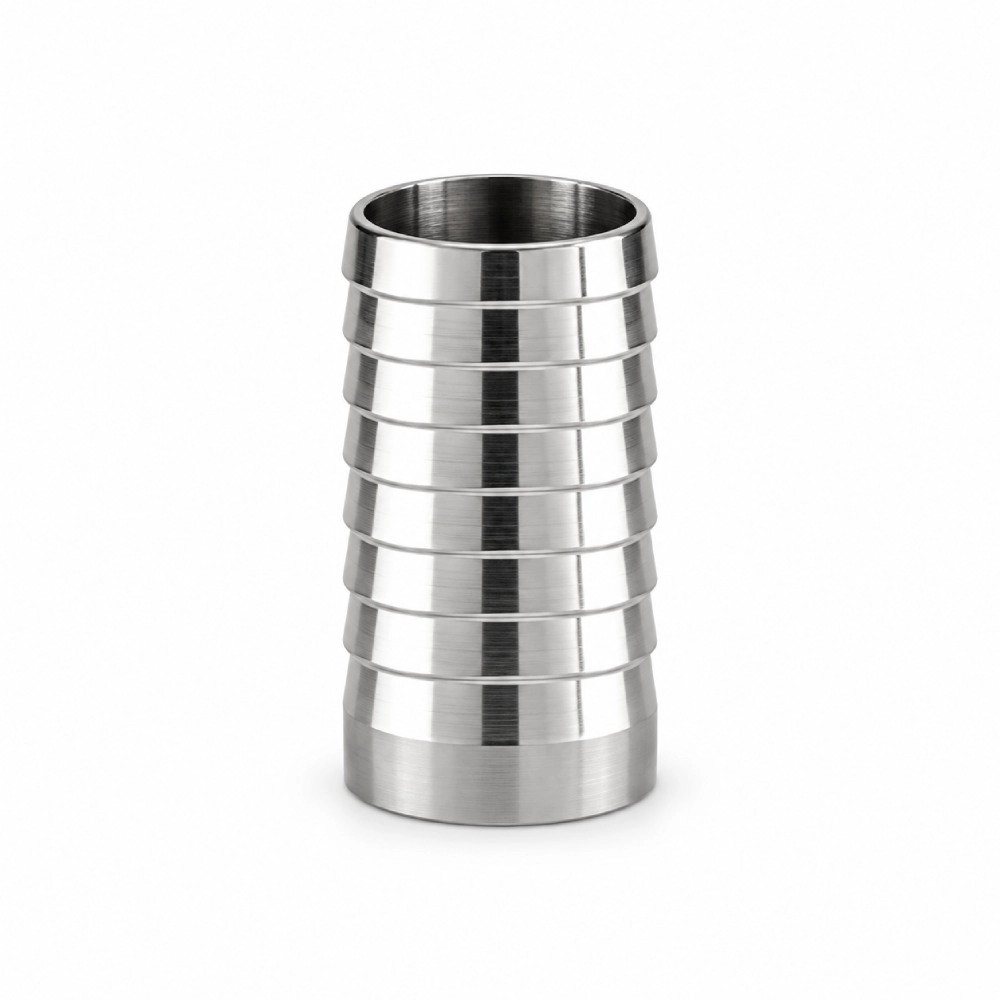
Sanitary Welded Hose Joints
Oystar Sanitary Welded Hose Joints connect compatible flexible hoses with hygienic process pipelines. Suitable for dairy, food, beverage, and other compatible liquid-transfer applications. Contact Oystar Dairy Fittings for specifications, availability, and pricing.
Material Compliance & Dimensional Specifications
Standard dimensions and manufacturing tolerances adhering strictly to ASTM and sanitary standards:
Sanitary Welded Hose Joints are hygienic pipeline connection components designed to connect flexible hoses with compatible process piping, equipment, and transfer systems. They are used in applications where cleanliness, secure connections, and efficient transfer of liquids are important.
Manufactured according to the selected design and application requirements, Oystar Sanitary Welded Hose Joints can be specified for suitable dairy, food processing, beverage, pharmaceutical, and other hygienic processing systems. The welded end allows integration with compatible stainless steel process lines, while the hose connection end supports the required hose assembly.
These joints can help facilitate the transfer of milk, dairy ingredients, beverages, water, and other compatible process fluids. Material grade, hose connection dimensions, surface finish, sealing arrangement, and operating limits should be confirmed according to the selected product model and process requirements.
Oystar Dairy Fittings serves customers seeking sanitary hose connections for new installations, equipment manufacturing, pipeline upgrades, and maintenance applications.
3. Applications of Sanitary Welded Hose Joints
Sanitary Welded Hose Joints are suitable for compatible hygienic fluid-handling systems, including:
- Connecting flexible hoses to stainless steel process pipelines.
- Milk collection, transfer, and dairy processing lines.
- Liquid ingredient transfer in food manufacturing facilities.
- Beverage production and processing systems.
- Connecting process equipment with hose assemblies.
- Liquid transfer between tanks, pumps, and processing equipment.
- Hygienic water and compatible liquid distribution systems.
- Pharmaceutical and personal-care processing applications, where the selected design meets applicable requirements.
- Replacement and maintenance of compatible hose connection assemblies.
The suitability of a joint depends on the process fluid, cleaning method, pressure, temperature, connection dimensions, and required hygiene standards.
4. Industries Where the Product Is Used
Dairy Industry: Used in suitable milk handling, cream processing, milk transfer, and dairy production systems.
Food Processing Industry: Supports compatible liquid ingredient transfer and hygienic production processes.
Beverage Industry: Used in suitable juice, syrup, beverage, and liquid processing lines.
Pharmaceutical Industry: Can be specified for compatible process systems when material, finish, cleanability, and regulatory requirements are satisfied.
Cosmetics and Personal Care: Used in suitable liquid and ingredient handling applications.
Food and Dairy Equipment Manufacturing: Suitable for equipment manufacturers requiring compatible hose-to-pipeline connections.
Industrial Liquid Processing: Can be considered for compatible non-corrosive or otherwise suitable liquids, subject to material and application verification.
5. Benefits of Sanitary Welded Hose Joints
Hygienic connection design: Intended for suitable sanitary fluid-transfer applications.
Secure hose integration: Helps connect compatible hoses with process pipelines.
Welded pipeline connection: Supports integration into appropriately designed piping systems.
Flexible installation options: Can be specified for different hose and pipeline configurations.
Durability: Performance depends on the selected material grade, construction, and operating conditions.
Maintenance convenience: Compatible replacement joints can help simplify servicing of existing hose assemblies.
Application versatility: Suitable for multiple food, dairy, beverage, and compatible process applications.
System compatibility: Correct dimensions and connection design help support reliable installation.
Custom specification support: Product selection can be based on required dimensions, materials, and operating conditions.